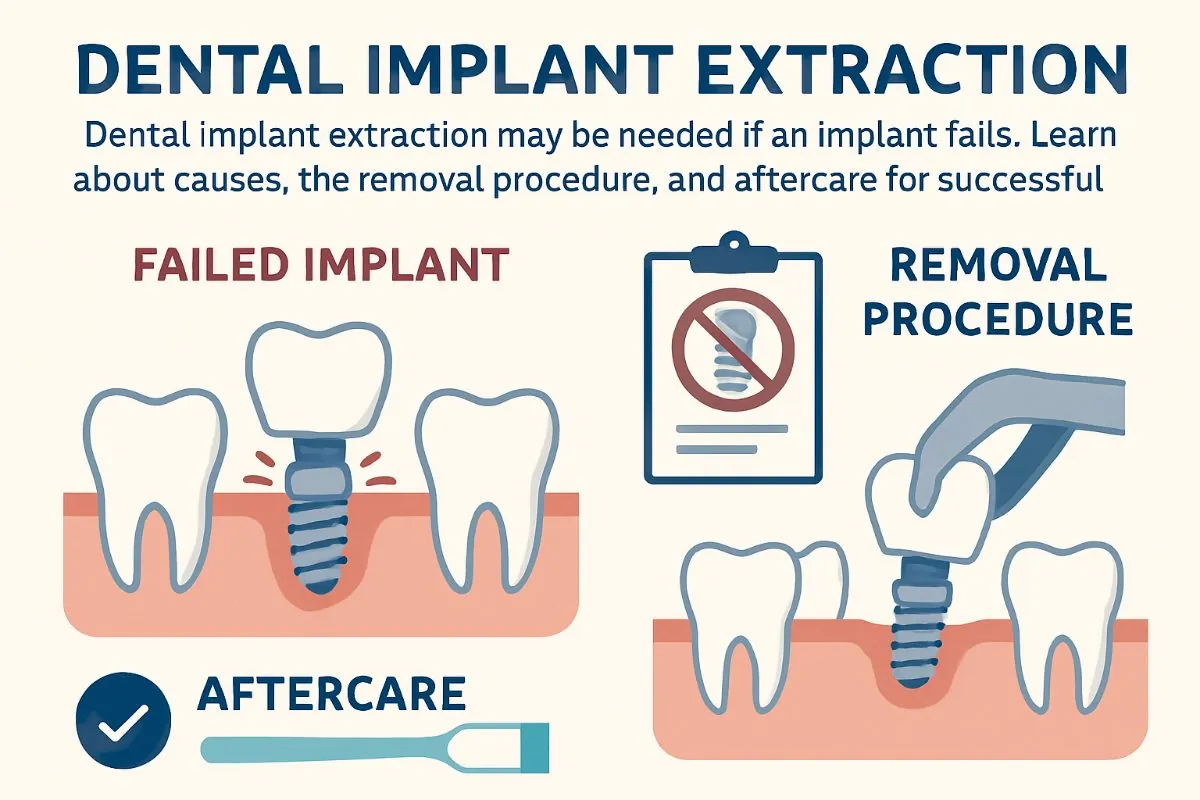
If you or a loved one is facing dental implant extraction, this article explains what that means, why it may be needed, and what comes next. This post is for patients who have been told an implant needs removing or who are worried about implant problems. You’ll learn common causes, short- and long-term risks, the typical healing timeline, aftercare tips, replacement options, and smart questions to ask your provider.
What Is Dental Implant Extraction and Why It’s Done
Dental implant extraction is the surgery to remove a failed or problematic dental implant. It’s different from removing a natural tooth because an implant is a metal post fused to the jawbone. Removing an implant often requires more planning and sometimes more invasive techniques than pulling a tooth.
Common reasons for extraction include:
- Infection around the implant (peri-implantitis) that damages bone and soft tissue
- Implant failure where the implant does not integrate with bone or becomes loose
- Incorrect implant position that causes bite or esthetic problems
- Fracture of the implant or the attached prosthesis
- Ongoing pain or nerve-related symptoms linked to the implant
Immediate Risks and Possible Complications
Short-term risks
- Bleeding at the surgical site for the first day or two
- Swelling and bruising around the mouth and jaw
- Pain that usually responds to prescribed or over-the-counter pain medicine
- Postoperative infection requiring antibiotics
Long-term or less common complications
- Bone loss where the implant was placed, which can affect future options
- Nerve injury causing numbness, tingling, or altered feeling in the lip, chin, or tongue (rare)
- Sinus perforation for upper jaw implants, which may need repair
- Difficulty or delay in placing a new implant later because of bone or soft tissue changes
What to Expect After Extraction: Healing and Next Steps
Healing after a dental implant extraction happens in stages. Here’s a typical timeline and what to watch for.
- First 24–72 hours: Expect bleeding, swelling, and discomfort. Rest, use cold packs, and follow pain control instructions.
- First 1–2 weeks: Swelling and pain should decrease. Stitches, if used, may be removed or dissolve. Light activities can resume as comfort allows.
- Months: Bone remodeling and maturation occur over several months. The extraction site will change shape as bone heals, which affects future treatment planning.
Aftercare tips:
- Take medications exactly as prescribed. Use cold packs for the first 48 hours, then warm compresses if needed.
- Keep the mouth clean but avoid aggressive rinsing for the first 24 hours. After that, rinse gently with salt water several times a day.
- Eat soft foods and avoid chewing on the extraction side until healed.
- Watch for heavy bleeding, fever, increasing pain, or spreading swelling — these need urgent attention.
Replacement options once healing allows:
- Reimplantation (placing a new implant) — possible if there is enough healthy bone and no active infection.
- Bone grafting — may be required first to rebuild bone before a new implant can be placed.
- Fixed dental bridge — uses adjacent teeth or implants to support replacement teeth.
- Removable dentures — a less invasive, often quicker option for replacing missing teeth.
Choosing the best option depends on bone quantity and quality, presence or history of infection, general health, budget, timeline, and patient preferences.
How to Choose a Provider and What Questions to Ask
Choosing the right provider matters for safe removal and the best long-term result. Ask these questions at your appointment:
- What caused the implant problem, and is removal the only option?
- Are there nonsurgical treatments we should try first?
- What technique will you use to remove the implant?
- Will I need a bone graft, and how long until I can get a new implant?
- What are your success rates for reimplantation after extraction?
- What will the total timeline and estimated cost look like?
- How will you manage pain, infection risk, and follow-up care?
Our practice evaluates failed implants with clinical exams and 3D imaging, treats infection or bone loss as needed, and coordinates removal and replacement plans so you understand the timeline and costs. If you suspect a problem with an implant, call to schedule an evaluation — early action often simplifies treatment and improves outcomes.