If you’re planning a dental implant, your dentist may tell you a bone graft for tooth implant is needed first. This short guide explains what a bone graft is, why it might be necessary, how it’s evaluated, common procedures, risks and recovery, costs and financing, and what to expect at a consult. Read on to learn when a graft helps make an implant safe and long-lasting.
What is a bone graft for tooth implant?
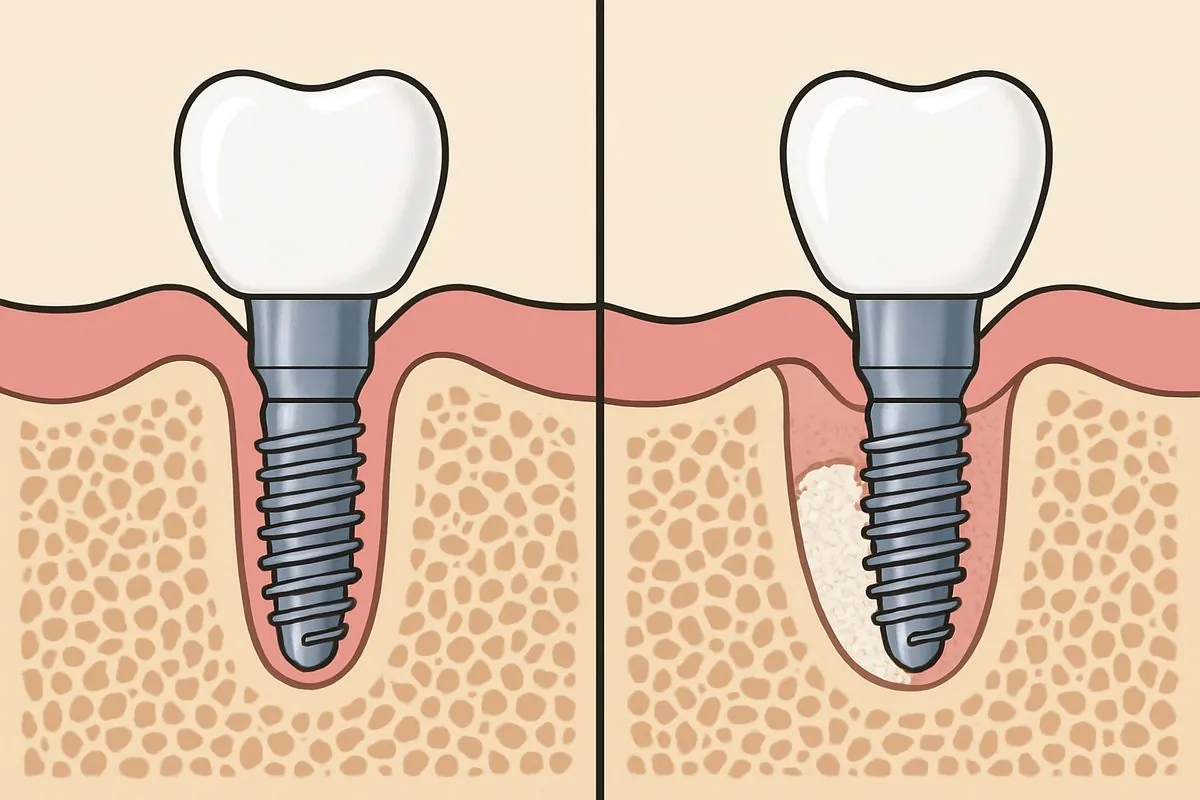
A bone graft for tooth implant is a procedure that adds bone or bone-like material to the jaw where bone has worn away. Common graft materials include autograft (your own bone), allograft (donor bone), xenograft (animal-derived), and synthetic grafts. The goal is to rebuild enough bone volume and density so the dental implant can be placed and supported long-term.
Why you might need a bone graft for tooth implant
Bone loss can happen after a tooth is lost, from gum disease, infection, or trauma. When bone height or width is too low, an implant won’t be stable. A graft restores the ridge so the implant can anchor correctly. Timing matters: some grafts are placed right after extraction (socket preservation) while others are done months before implant placement to allow healing.
How dentists decide if you need a bone graft for tooth implant
Evaluation starts with a clinical exam and 3D imaging (CBCT). The dentist measures bone height and width and looks at nearby structures like the sinus or nerve canals. Digital planning and virtual implant placement help determine whether a graft is needed and what type will work best for your situation.
Common bone graft procedures and what to expect
Socket preservation (ridge preservation)
Placed after extraction to keep the socket from shrinking. It helps preserve bone for future implants.
Ridge augmentation
Builds up a thin or collapsing ridge so an implant has enough width and height.
Sinus lift (maxillary sinus augmentation)
Lifts the sinus floor and places graft material for implants in the upper back jaw.
Block grafts and guided bone regeneration
Block grafts use a solid piece of bone to rebuild large defects; guided bone regeneration uses membranes to direct bone growth. Procedures typically take 30–90 minutes, use local anesthesia or sedation, and require several months of healing before implant placement.
Risks, recovery, and success rates for a bone graft for tooth implant
Normal side effects include swelling, mild pain, and minor bleeding. Risks are infection, graft rejection or failure, and delayed healing. When done properly, grafts significantly increase implant success rates. Most patients see steady improvement in 4–6 months, with full integration taking longer depending on graft type.
Costs, insurance, and financing options to consider
Costs vary by graft type, size, and need for extra procedures like sinus lifts. Insurance may cover part of the cost if medical necessity is documented, but many plans exclude elective grafts. Financing options like Cherry Payment Plans can help spread costs and make treatment more manageable.
Why choose Wellington Family Dentistry & Implant Center for bone grafts and implants
Wellington Family Dentistry & Implant Center in Wellington, CO offers advanced digital imaging, 3D planning, CEREC same-day restorations, and flexible financing. Dr. David J. Pringle brings specialized implant training and a patient-centered approach to complex cases, helping patients get reliable, natural-looking results.
Next steps: preparing for a consult about a bone graft for tooth implant
Expect an initial exam, CBCT imaging, and a clear treatment plan with costs and timeline. Ask about graft materials, healing time, anesthesia, and financing. To learn if a bone graft for tooth implant in Wellington, CO is right for you, schedule an evaluation to get personalized recommendations and a written estimate.