


Dental implants replace missing teeth with a metal post, an abutment, and a crown. Patients often ask, how long do implant teeth last? The short answer: implant parts can last decades, but the lifespan varies by type of component, care, and health. This guide explains typical timelines, what affects longevity, and practical steps to extend implant life.
How long do implant teeth last: typical lifespan
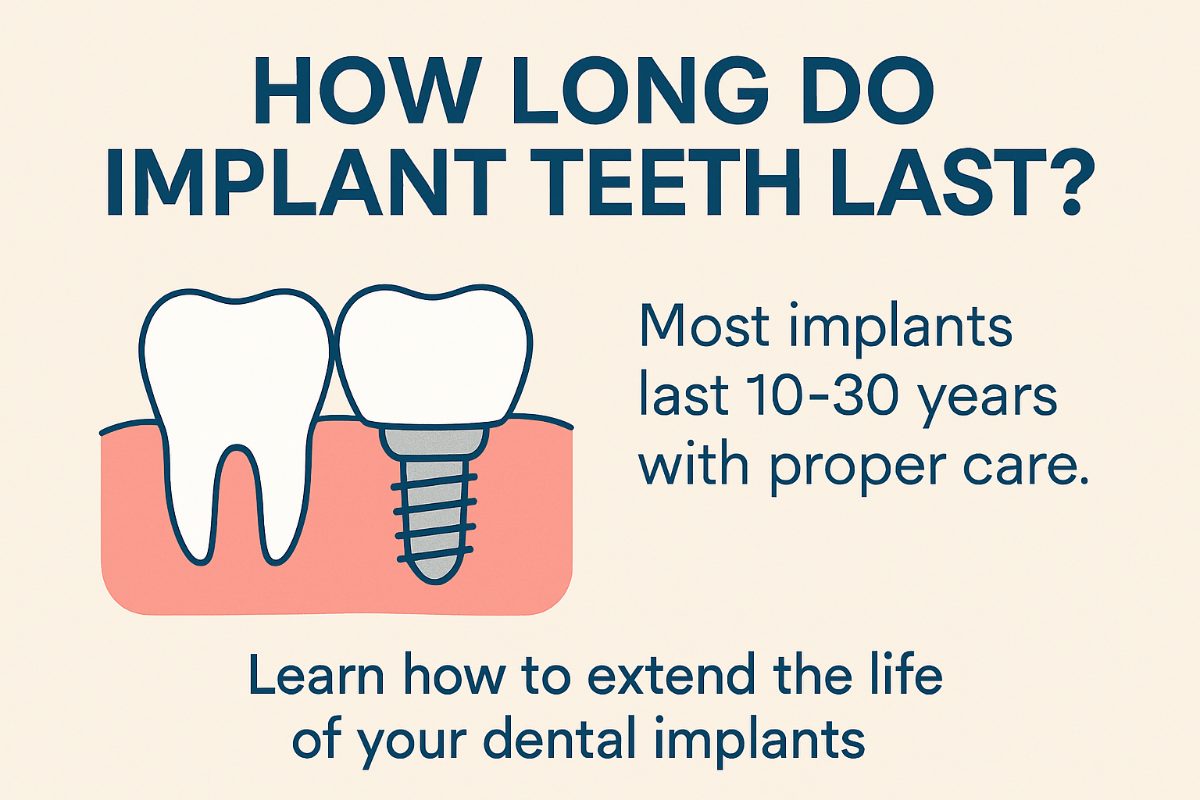
Most dental implants last between 10 and 30+ years. Many people keep their implants for life when they follow good care and have healthy gums and bone. It helps to know the parts:
- Implant post: the titanium or zirconia screw placed in the jaw. This is the most durable part and can last a lifetime if osseointegration (bone bonding) is successful.
- Abutment: the connector between post and crown. Abutments are strong but may need replacement if damaged or if the connection loosens.
- Crown: the visible tooth replacement. Crowns wear over time and often need replacement every 10–15 years depending on material and bite forces.
Key factors that determine how long implant teeth last
Oral hygiene and gum health
Poor hygiene raises the risk of peri-implantitis, a gum infection that destroys bone around the implant. Regular brushing, cleaning under and around the crown, and professional cleanings lower that risk and greatly improve implant lifespan.
Bone quality and initial healing
Good bone density and successful osseointegration are critical. If the implant bonds well with bone during healing, it’s far more stable long term. Low bone density or failed integration can shorten implant life or require additional procedures like bone grafts.
Lifestyle and medical factors
Smoking, uncontrolled diabetes, and certain medications (like some antiresorptives) increase failure risk. Bruxism (teeth grinding) places higher forces on crowns and implants and can cause breakage or loosening without protection.
Prosthetic design and materials
Crown material (porcelain, zirconia, or hybrid) and how the bite is set up matter. Poor planning, thin crowns, or high bite forces can wear or fracture restorations sooner. A well-designed prosthesis spreads force correctly and lasts longer.
How to make implant teeth last longer
You can improve longevity with simple routines and smart choices.
- Daily care: brush twice a day, floss or use interdental brushes around the implant, and use an antimicrobial rinse if advised.
- Routine professional care: schedule regular dental cleanings and exams; X-rays help monitor bone levels and implant stability.
- Preventive steps: quit smoking, manage chronic conditions like diabetes, and wear a nightguard if you grind your teeth.
- Expect repairs: plan for crown replacement every 10–15 years on average. Signs like chips, looseness, or changed color often mean the restoration—not the implant—needs work.
When to see a dentist about implant problems (and what they’ll do)
Contact your dentist promptly if you notice warning signs:
- Pain or persistent soreness around the implant
- Mobility of the crown or implant
- Swelling, redness, or pus at the gum line
- A changing bite or difficulty chewing
Typical evaluations include a clinical exam, probing gum health, and X-rays to check bone. Treatments depend on the issue and can include deep cleaning around the implant, antibiotics, adjustments or replacement of the crown, and bone grafting if bone loss is present. In serious cases, an implant may need removal.
If you’re wondering how long do implant teeth last in your situation, consult an implant dentist or specialist for a personalized assessment and long-term maintenance plan. Early care and regular follow-up are the best ways to protect your investment and keep your smile functioning for years.