

If you’re wondering which statement best defines the qualifications of a prosthodontist, the short answer is: a prosthodontist is a dentist who completed dental school plus advanced, accredited specialty training in restoring and replacing teeth. This article explains that definition in plain terms, outlines the formal education and clinical skills that set prosthodontists apart, shows why those qualifications matter for patients, and tells you how to verify credentials before treatment.
What is a prosthodontist?
A prosthodontist is a dental specialist focused on complex restorative care. Typical work includes dental implants, crowns, bridges, removable dentures, and full-mouth reconstruction. Prosthodontists plan and execute treatments that restore function, bite alignment, and appearance for patients with missing or damaged teeth.
Formal education and training requirements
Dental degree (DDS or DMD)
All prosthodontists start by earning a dental degree (DDS or DMD). Dental school gives the basic knowledge of oral health, diagnosis, and general dental procedures. This degree is the baseline that allows a dentist to practice.
Postdoctoral prosthodontic residency
After dental school, prosthodontists complete a 2–3+ year accredited residency in prosthodontics. This intensive training focuses on prosthetic dentistry, implant restorations, occlusion (bite) management, advanced treatment planning, and complex clinical cases not typically handled by general dentists.
Board certification and ongoing education
Board certification by the American Board of Prosthodontics is optional but meaningful. It shows a higher level of testing and peer review. Like all high-quality clinicians, prosthodontists also do continuing education to keep skills current with evolving materials and technologies.
Clinical skills and technical competencies
Prosthodontists are skilled in treatment planning, managing occlusion, designing implant-supported restorations, and creating esthetic crowns, bridges, and dentures. They routinely handle full-arch rehabilitation and complex bite problems that require coordinated care and precise lab work.
Proficiency with advanced dental technology
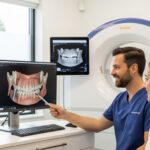
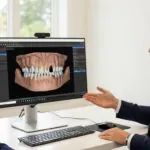
Modern prosthodontists use digital tools like CAD/CAM, digital impressions, 3D planning, and guided implant surgery. These technologies improve accuracy, reduce lab errors, and can speed treatment, such as same-day restorations.
Why these qualifications matter for patients
Advanced training and technology translate to better outcomes: fewer complications, restorations that fit and function longer, and results that look natural. For complex cases—multiple implants, full-mouth rebuilds, severe bite issues—a prosthodontist’s extra training reduces risk and improves long-term success.
How to verify a prosthodontist’s credentials
What to look for
Check for a DDS or DMD, a prosthodontic residency certificate, and any board certification or specialty membership. Look for before-and-after photos and published case examples that show treatment similar to yours.
Questions to ask at a consult
Ask about experience with your specific procedure, success rates, the technology used, and expected timeline. Request to see patient photos or speak with patients who had similar work.
Common misconceptions
A general dentist or a cosmetic dentist can do many restorations, but they do not have the same specialty training as a prosthodontist. Choose a prosthodontist when you need complex restorative care, implant-based full-arch solutions, or comprehensive bite rehabilitation.
Choosing a qualified provider — About Wellington Family Dentistry & Implant Center
Wellington Family Dentistry & Implant Center in Wellington, CO, led by Dr. David J. Pringle, offers advanced implant and restorative care. The team uses CEREC same-day restorations, CAD/CAM, 3D printing, and digital imaging to plan and deliver precise results. They emphasize patient-centered planning and flexible financing to help patients access complex care.
Next steps & short CTA
If you need complex restorative or implant care, schedule a consult. Bring questions about training, technology, and treatment timeline so you can feel confident in your provider’s qualifications.