
Losing a tooth can change how you chew, speak, and smile. The phrase options to replace a missing tooth covers the main ways dentists restore function and appearance. Choosing the right option matters for your long-term oral health, comfort, and budget. This guide previews common choices and how to decide which fits you best.
Common Options To Replace A Missing Tooth
Dental implant with crown
A dental implant replaces the tooth root with a titanium post placed in the jaw. After healing, a crown attaches to the implant. Implants feel and function like natural teeth, resist decay, and can last many years with good care.
Fixed dental bridge
A fixed dental bridge uses the teeth on either side of the gap for support. The middle piece replaces the missing tooth. Bridges work well when nearby teeth are healthy enough to support the device, but they require altering those teeth and may need replacement over time.
Removable partial denture
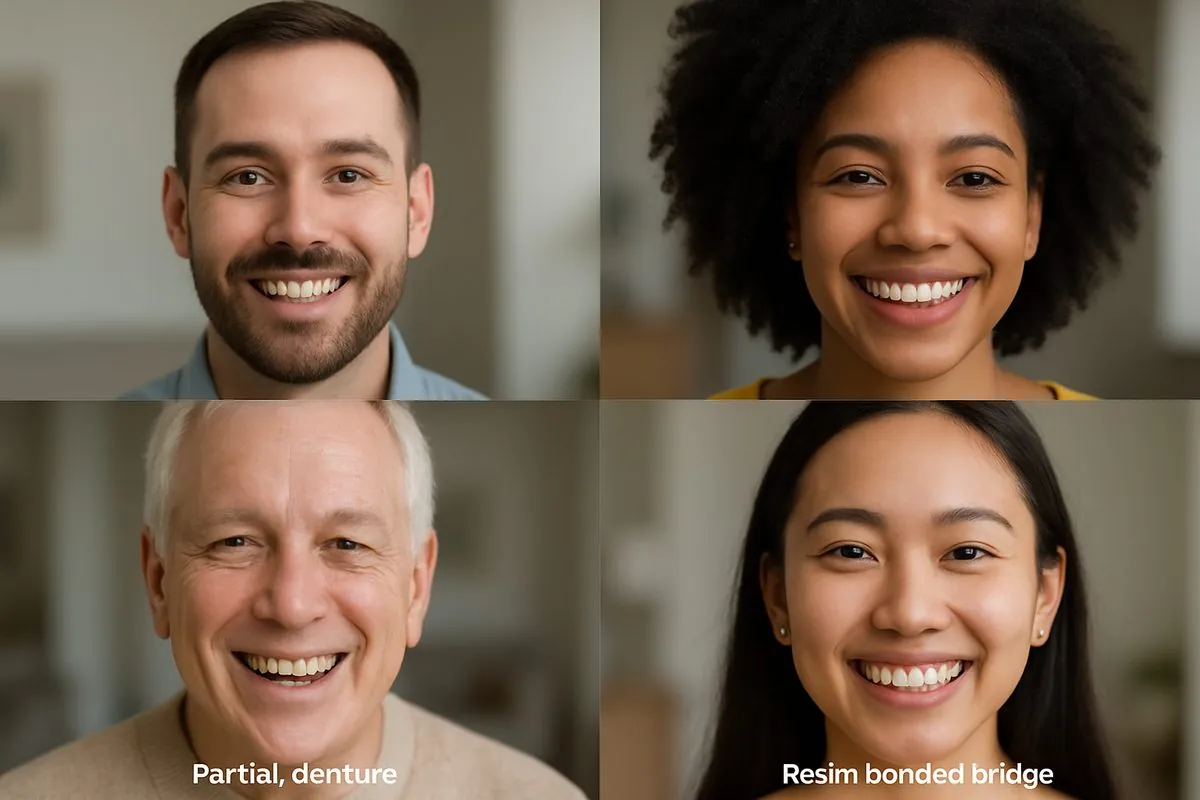
A removable partial denture clips onto remaining teeth and can be taken out for cleaning. It is usually less expensive and faster to get than implants or bridges. Maintenance is higher, and fit or comfort can be an issue for some people.
Resin-bonded (Maryland) bridge
A bonded bridge uses metal or ceramic wings glued to the back of adjacent teeth. It’s less invasive than a traditional bridge and preserves more tooth structure, but it is generally used for front teeth and may not be as durable under heavy biting forces.
How To Choose Among These Options
Oral health and bone levels
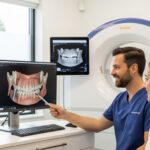
Healthy gums and enough jawbone are key. Bone loss can make implants harder without grafting. Active gum disease must be treated first. Your dentist will check X-rays and scans to see what’s possible.
Budget and insurance
Think about upfront cost versus long-term value. Implants cost more initially but often last longer. Bridges and dentures can be cheaper up front. Check your dental insurance for coverage limits and ask about payment plans.
Lifestyle and maintenance
Consider how much daily care you want. Implants clean like natural teeth. Dentures need nightly cleaning and possible relines. If you play contact sports or grind teeth, some options may be a better fit.
What To Expect If You Choose A Dental Implant
Typical steps: consultation and imaging, implant placement, healing (osseointegration), and final crown placement. Some cases need bone grafts or sinus lifts before implant placement. Total timeline can range from a few months to several months depending on healing and additional procedures.
Pros and Cons Quick Comparison
– Implant with crown: Pros — natural feel, long-lasting; Cons — higher upfront cost, surgery and healing time.
– Fixed bridge: Pros — stable, quicker than implant; Cons — alters adjacent teeth, shorter lifespan.
– Removable partial denture: Pros — lower cost, noninvasive; Cons — less stable, more maintenance.
– Resin-bonded bridge: Pros — conservative, preserves tooth structure; Cons — less durable, best for front teeth.
Costs, Financing, And Ways To Afford Treatment
Costs vary by case and location. General ranges: implants tend to be highest, bridges moderate, dentures lower. Many practices offer financing and in-house plans. Cherry Payment Plans and other monthly financing options can make treatments affordable.
Why Provider Expertise Matters
Choosing an experienced implant team affects outcomes. Wellington Family Dentistry & Implant Center and Dr. David J. Pringle in Wellington, CO use advanced tools like CEREC same-day restorations, CAD/CAM, 3D printing, digital imaging for 3D prostheses, and micron mapper photogrammetry to improve precision, speed, and comfort.
Schedule a consultation to get a personalized plan. Bring dental records and X-rays if you have them. Ask about financing and same-day restoration options to see which of the options to replace a missing tooth in Wellington, CO fits your needs.