
A dental prosthesis implant replaces missing teeth by combining a surgically placed root with a custom-made artificial tooth. This guide explains what a dental prosthesis implant is, who benefits, the types available, the treatment steps and healing, risks and aftercare, how modern tech improves results, and how to choose a provider. Read on to see if this reliable tooth-replacement option might be right for you.
What Is a Prosthesis Dental Implant?
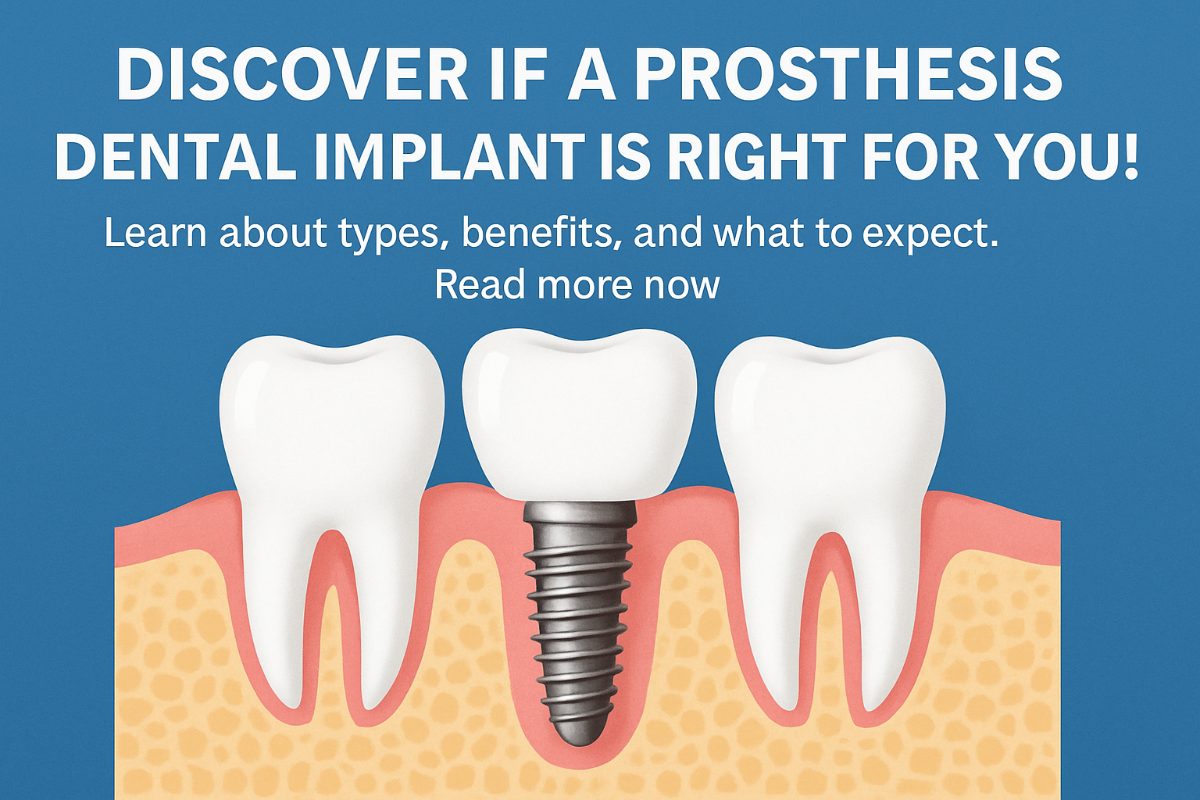
An implant is a small post—usually made of titanium or zirconia—placed in the jaw to serve as a tooth root. The prosthesis is the visible replacement: a crown, bridge, or denture that attaches to one or more implants. Together, they restore function and appearance while helping preserve jawbone and facial structure.
Common Types of Prosthesis Dental Implants
Single-tooth prosthesis
An implant-supported crown replaces one missing tooth. The implant holds a crown that looks and acts like a natural tooth. This avoids altering adjacent teeth, as with a traditional bridge.
Implant-supported bridge
When two or more teeth are missing in a row, implants can support a bridge. Rather than placing a crown on every missing tooth, implants anchor the bridge, reducing the number of implants needed and creating a stable, natural-feeling result.
Overdentures and full-arch prostheses
For most or all teeth missing, options include removable overdentures (snap-on) or fixed full-arch prostheses (permanent). Removable solutions can be easier to clean and less costly; fixed options feel more like real teeth and offer greater bite strength. Your lifestyle, budget, and bone condition help determine the best choice.
Who Is a Good Candidate?
Good candidates have stable medical conditions, adequate jawbone volume, and healthy gums. Smoking can raise the risk of failure. Uncontrolled diabetes or certain medications may affect healing. A dentist will assess bone quantity and quality, gum health, and overall health, and talk about realistic expectations.
What to Expect: Steps, Timeline, and Healing
Treatment starts with a consultation and digital planning. Some patients need bone grafting first, which adds healing time. Implant placement is a minor surgery; healing (osseointegration) usually takes weeks to months. After healing, impressions or digital scans are taken and the final prosthesis attached. Some patients qualify for same-day restorations, in which a temporary or final restoration is placed at the time of surgery.
Benefits, Risks, and Aftercare
Benefits include improved chewing, clearer speech, a natural look, and bone preservation. Risks include infection, implant failure, and the need for additional procedures. Home care is simple: brush twice daily, floss or use interdental brushes, and attend regular dental cleanings. Follow-up checks ensure long-term success.
How Modern Technology Helps Prosthesis Dental Implant Outcomes
Digital tools improve accuracy and speed. CAD/CAM and CEREC let labs or offices mill precise restorations, sometimes the same day. 3D printing creates accurate models and guides. Digital imaging and photogrammetry (micron mapper) map anatomy for precise planning and a better fit, reducing chair time and remakes.
Choosing a Provider for Your Prosthesis Dental Implant
Wellington Family Dentistry & Implant Center in Wellington, CO, led by Dr. David J. Pringle, offers technology-forward implant care with digital workflows and same-day CEREC restorations. The office provides clear communication, a comfortable patient experience, and financing options, such as Cherry Payment Plans, to help make care more accessible.
Next Steps: Is a Prosthesis Dental Implant Right for You?
Checklist for your consult: Ask about experience with implants and full-arch cases, digital planning tools used, timeline and costs, and financing. Bring a list of medications, recent dental records or X-rays, and questions about recovery. To learn if a prosthesis dental implant fits your needs, schedule an evaluation with a qualified implant provider.